Asphalt Contractor Palo Alto CA: Engineered Asphalt Paving
Delivering durable asphalt paving, full-depth reconstruction, and structural resurfacing across Palo Alto and the Silicon Valley corridor. Operated by We Love Paving, Inc., our crews execute heavy-duty pavement solutions built strictly to municipal engineering standards.
- Caltrans-spec Type A Hot Mix Asphalt engineered for Santa Clara Valley expansive clay subgrades
- Precision grading and compaction for strict Title 24 (Chapter 11B) accessibility compliance
- Turnkey project management for Palo Alto parking facilities, access roadways, and campuses
ENGINEERED ASPHALT PAVING CONTRACTOR IN PALO ALTO
Palo Alto Asphalt is operated by We Love Paving, Inc. (CSLB #1049649 · DIR #1000590190 · CA CARRIER #571708), delivering heavy-duty asphalt installation, precision milling, and structural pavement rehabilitation throughout Silicon Valley. Backed by full California licensing, public works DIR registration, and dedicated heavy machinery fleets, our paving operations serve properties along Page Mill Road, facilities on El Camino Real, and vehicle access networks throughout Palo Alto.
Resolving Structural Asphalt Deterioration on Silicon Valley Subgrades
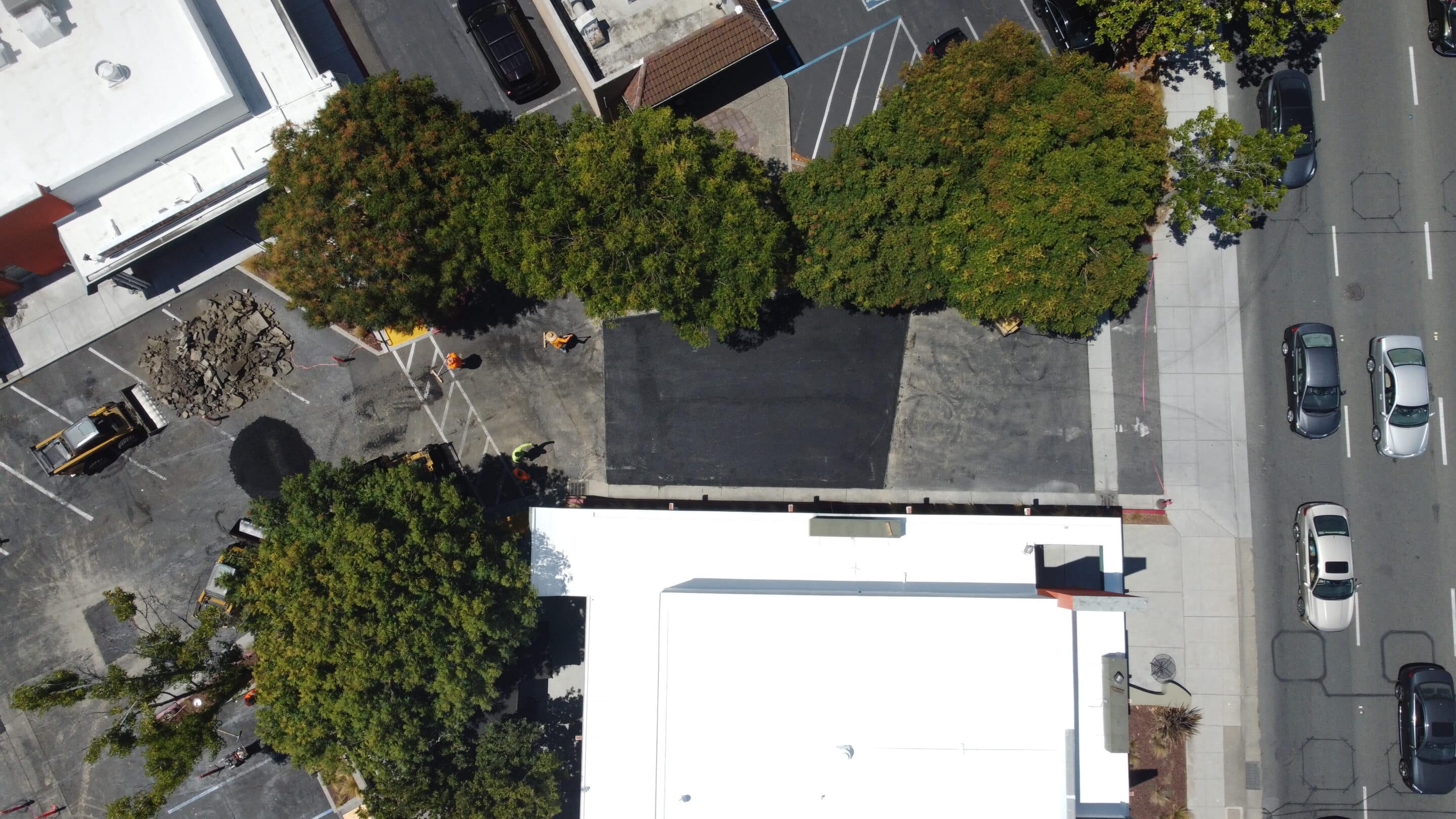
Property owners and facility managers in Palo Alto face continuous pavement stress: heavy refuse haulers, regular vehicle traffic, and persistent subgrade movement driven by high-plasticity clay soils native to the Santa Clara Valley basin. When unsealed surface fissures allow rainwater to penetrate the underlying base rock, localized fatigue cracking rapidly escalates into base failure, subgrade subsidence, and acute liability risks.
Our asphalt paving solutions resolve these risks through methodical geotechnical assessment of the aggregate sub-base, calibrated laser-guided grading, and compaction of Caltrans-certified Hot Mix Asphalt (HMA). Whether a site requires deep section reconstruction, an engineered structural overlay, or coordinated parking lot maintenance, this guide details our civil standards, municipal compliance protocols, and site execution methods.
SCHEDULE A TECHNICAL PAVEMENT EVALUATION IN PALO ALTO
Heavy-duty asphalt paving, milling, and resurfacing tailored to Palo Alto municipal codes and Silicon Valley site conditions.
Sub-Base Engineering and California Civil Specifications
Every Palo Alto paving project begins with subgrade verification rather than cosmetic surface applications. We engineer pavement cross-sections based on verified California Traffic Index (TI) loadings, ensure Class 2 Aggregate Base is compacted to 95% relative density under ASTM D1557, and verify drainage profiles to prevent premature pavement degradation.
- ASTM Compaction Standards
- Laser-Guided Grade Control
- Caltrans Spec HMA
- Title 24 ADA Layout
This Is What Our Clients Say About Our Work
Parking Facility Reconstruction & Full-Depth Pavement Design
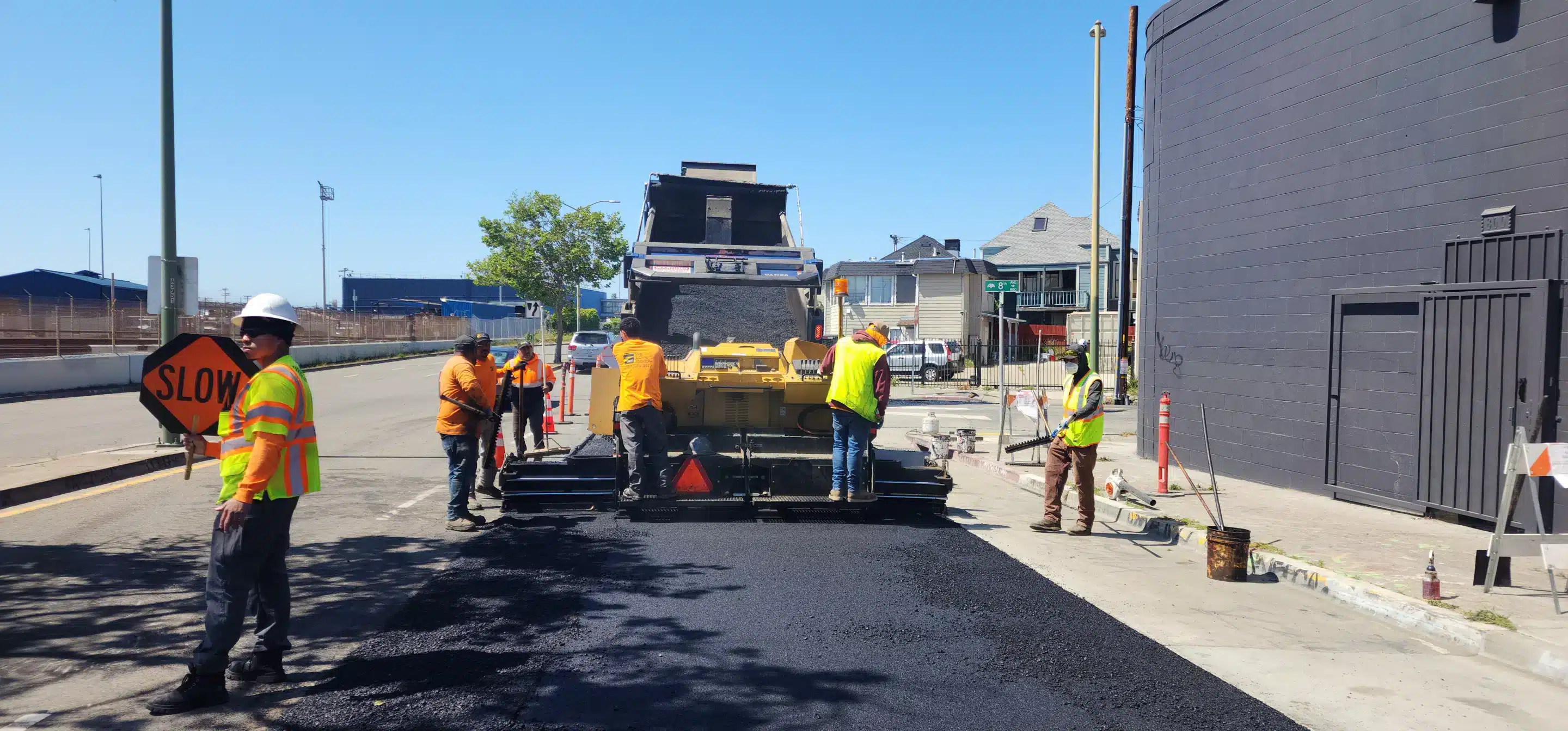
High-traffic parking facilities and arterial drive aisles across Palo Alto including campuses in Stanford Research Park and properties along El Camino Real sustain continuous shear stresses from delivery fleets, utility vehicles, and daily traffic. When pavement reaches structural fatigue, thin surface patches fail within months because underlying moisture has destabilized the expansive adobe clay subgrade.
Pavement Rehabilitation, Municipal Tree Codes & ADA Compliance
Palo Alto vehicle networks and community access routes must balance pavement longevity with municipal environmental mandates. Projects must strictly adhere to the Santa Clara Valley Urban Runoff Pollution Prevention Program (SCVURPPP) for drainage and Palo Alto Municipal Code Chapter 8.10 protecting native tree canopies. Furthermore, uneven pavement settlement creates trip hazards and compromises mandatory path-of-travel accessibility.
Our paving crews navigate these localized constraints by coordinating grading around designated Tree Protection Zones (TPZ), engineering positive surface slopes between 1.5% and 2.0% to prevent ponding, and reprofiling stalls to maintain exact ADA compliance under Title 24 Chapter 11B (maximum 2.00% cross-slope). Projects are systematically phased to maintain vehicular access and emergency clearance throughout construction.
Engineering Benchmarks for Asphalt Paving in Palo Alto
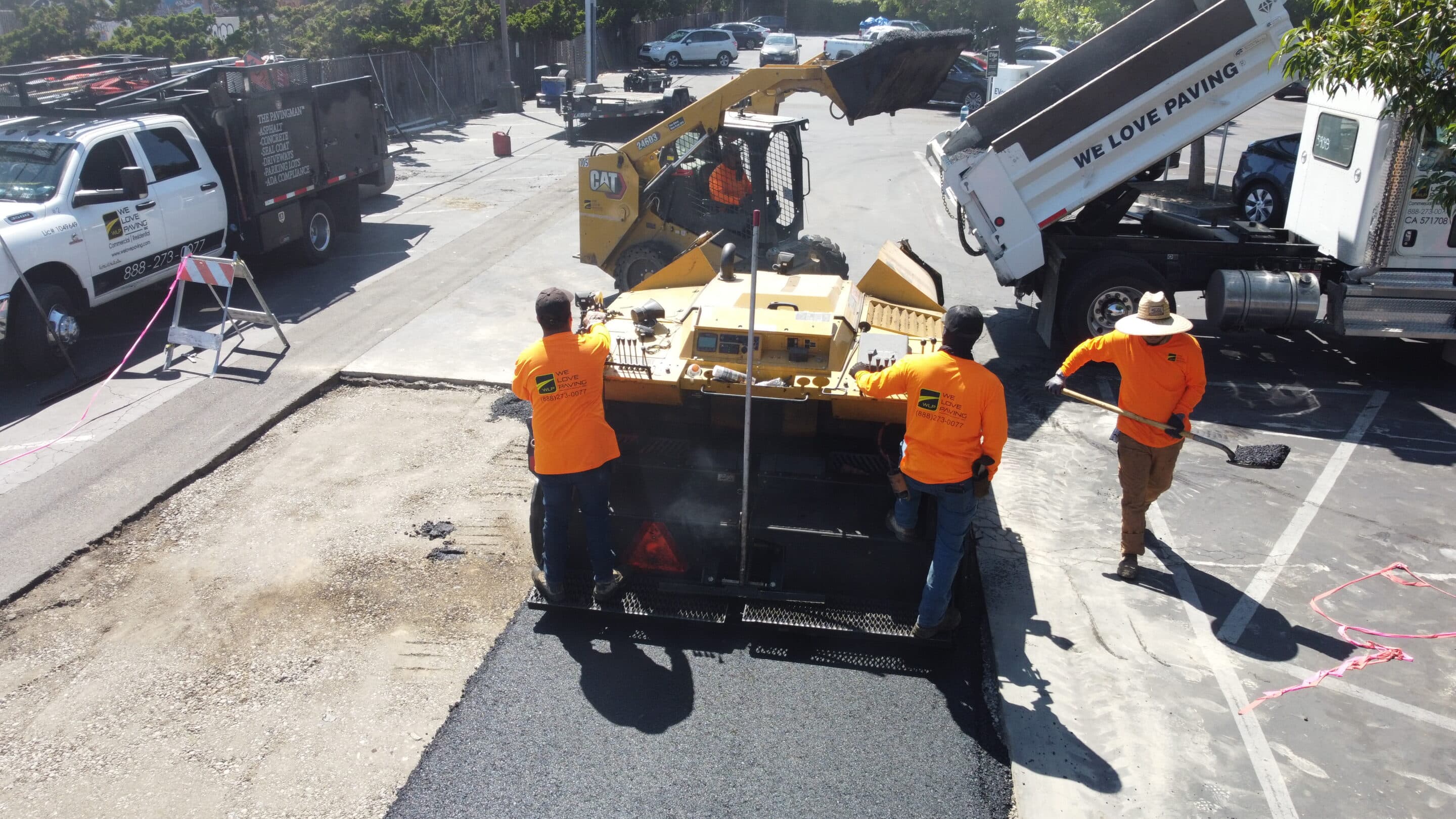
The following table details core structural variables, governing regulatory factors, field execution strategies, and verified technical standards applied to commercial asphalt paving projects in Santa Clara.
| Variable | Compliance Factor | Technical Strategy | Field Data |
|---|---|---|---|
| Foundation & Subgrade Stability | Expansive Clay Soil Shifting (ASTM D1557) | Engineered, high-compaction crushed stone base that stops pavement from sinking, rutting, and cracking under heavy daily loads | Prevents 90% of Premature Potholes & Sinks |
| Surface Durability & Longevity | Heavy Traffic Wear & Weathering (Caltrans Spec) | Premium hot-mix asphalt laydown that seals out moisture infiltration and maintains a smooth, continuous surface under constant vehicle flow | Maximizes Pavement Life up to 20+ Years |
| Stormwater & Water Flow | Ponding Damage & Runoff Codes (SCVURPPP) | Laser-guided slope grading that eliminates standing puddles immediately, protecting your investment from water deterioration and trip-and-fall hazards | Eliminates Standing Puddles & Moisture Softening |
| Accessibility & Legal Protection | California Title 24 & ADA Liability Protection | Millimeter-accurate elevation grading across stalls and walkways, shielding property managers from costly non-compliance citations and predatory lawsuits | 100% Inspection-Ready Lawsuit Protection |
Engineered Pavement Reliability for Palo Alto Properties
Managing paved assets above the expansive clay subgrades and strict regulatory environment of Palo Alto requires a civil contractor focused on structural engineering rather than superficial fixes. By integrating geotechnical base preparation, Caltrans-spec Type A asphalt compaction, and verified Title 24 accessibility slopes, Palo Alto Asphalt builds heavy-duty surfaces designed to maximize service life and eliminate property liability.
Frequently Asked Questions on Palo Alto Asphalt Paving
Technical, operational, and regulatory guidance for property managers and site owners in Palo Alto.
How do expansive clay soils in Palo Alto affect asphalt pavement lifespan?
Palo Alto sits on alluvial clay subgrades that expand significantly during wet winter months and contract during dry summers. If asphalt is installed over an inadequate base or without proper moisture barriers, this cyclic soil movement causes severe fatigue cracking and base failure. We mitigate this by engineering a minimum 6-to-8-inch Class 2 Aggregate Base compacted to 95% relative density (ASTM D1557), ensuring a rigid foundation that isolates the asphalt surface from seasonal subgrade movement.
How does your paving team operate around protected heritage trees in Palo Alto?
Under Chapter 8.10 of the Palo Alto Municipal Code, heritage trees such as Coast Live Oaks and Coast Redwoods require strict root preservation within their designated Tree Protection Zone (TPZ). When repaving parking bays or drive aisles near mature canopies, our operators coordinate non-destructive grading, shallow cold milling, or hand-grading to prevent root tearing, avoiding heavy vibratory roller passes directly over sensitive root structures.
How quickly can a paved facility in Palo Alto reopen to traffic after paving?
Caltrans-spec Hot Mix Asphalt (HMA) achieves its structural stability through cooling rather than chemical curing. Passenger vehicle traffic can typically resume within 24 to 48 hours once internal asphalt temperatures drop below 100°F. For heavy vehicle traffic, including regular refuse haulers and delivery fleets, we recommend restricting heavy access for 48 to 72 hours to prevent surface scuffing during high ambient temperatures.
What municipal permits are required for asphalt paving in Palo Alto?
Routine surface maintenance, such as sealcoating or isolated patching, generally does not require a building permit. However, full-depth reconstruction, major regrading, projects modifying site drainage under SCVURPPP stormwater guidelines, or operations encroaching on the public right-of-way require permits from the City of Palo Alto Public Works Department. Furthermore, any restriping or reconfiguration of parking stalls triggers mandatory review for California Title 24 Chapter 11B accessibility compliance.
What is the required slope for parking facility drainage versus ADA compliance in California?
Paved asphalt surfaces must balance two contrasting engineering standards: surface drainage requires a minimum slope of 1.5% to 2.0% to prevent standing water that softens asphalt binders, while Title 24 California Building Standards Code (Chapter 11B) mandates that ADA parking stalls and access aisles cannot exceed a maximum slope of 2.00% (1:50) in any direction. We utilize digital levels and laser-guided grading to balance slopes between 1.5% and 1.8% in accessible zones without exceeding the 2.00% legal threshold.
What determines whether an asphalt surface needs an overlay or full-depth reconstruction?
An asphalt overlay is appropriate when distress is limited to the upper surface layer and the aggregate base rock remains structurally intact and deflection-free. If core extractions reveal deep alligator cracking reaching the subgrade, sub-base contamination, or severe rutting caused by subgrade settlement, an overlay will reflect those cracks within 12 to 18 months. Under those conditions, full-depth reconstruction is necessary to rebuild the base foundation.
Request Your Estimate
Tell us what you need help with. We'll review the project details and follow up with next steps, no obligation.
Phone
650-460-1786
Email
[email protected]
Location
511 Jacklin Rd, Palo Alto
Hours
Mon–Fri 8:00 AM – 5:00 PM
Start Your Free Project Request
Request a Technical Pavement Assessment in Palo Alto
Contact our civil paving specialists to schedule an on-site pavement condition evaluation, laser elevation audit, and line-item scope of work.